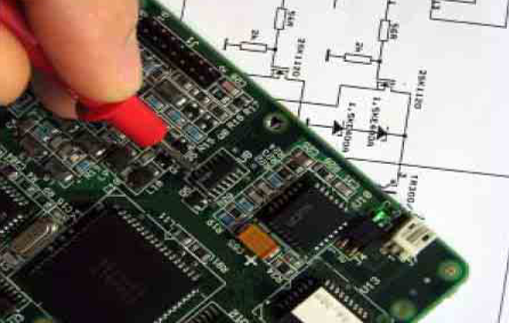
Electronic design starts from the analysis of product requirements and the development of technical specifications.
Once this preliminary study is complete, our team drafts the design, test and product certification documentation, then selects the electronic components and materials suited to achieving the project goals. For integrated circuit design (FPGA, ASIC), VHDL and VERILOG languages are used together with latest-generation simulation tools (ModelSim). Block and detailed circuit diagrams are then produced, with symbol creation and library management, according to standards and/or customer requirements.
PCB/Board layout design
Printed board designers know the techniques for implementing digital and analog electronic boards (PCBs). They use the indications resulting from Design For Fabrication (DFF), Design For Manufacturing (DFM) and Design For Test (DFT) analyses. They have extensive experience in creating physical symbols and managing libraries, and follow IPC standard guidelines (Reference: MTC-009 – IPC Designer Certification Course).
Thermal simulation
Thermal simulation highlights product performance, operation and long-term reliability issues. Our team performs an accurate analysis of the thermal behavior of equipment or its parts, starting from the identified geometric models. Heat sinks are then sized and cooling systems selected, based on a preventive analysis of thermal criticalities.
Electrical simulation
Electrical simulation is used for the preventive verification of signal quality. Electrical signal simulation techniques help understand the performance limits of boards, improve signal routing and find the optimal technological solution for printed boards.